

The mundane bores me.
And contrary to what people assume, independent life does not fix this. If anything it adds more. Since there is no longer anyone else you can ask to help with invoices, contracts, and all other administrative tasks. All yours.
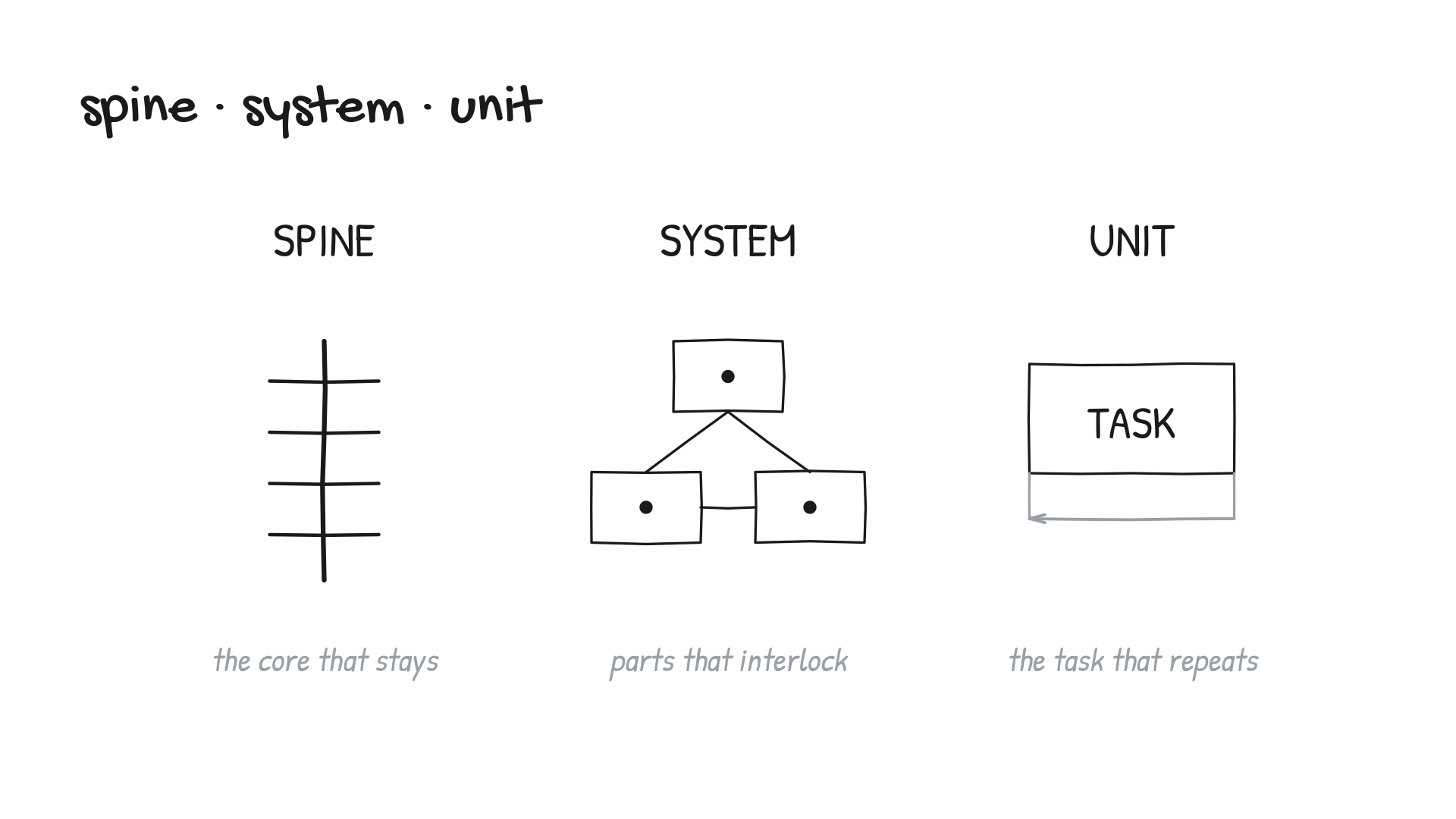
So I have become a little obsessed with one question. How do I avoid doing the boring things more than once? The answer is finding a spine, system and unit. Which is exactly what I have spent this year teaching other people about - only in AI governance instead of life.
A lighter week. A call with UAE regulators. A lunch with a chief strategy officer at a government agency. A meeting with a startup founder. Building decks by modules instead of client by client. Several ebooks started or completed. A new watercolor style that started as an experiment.
I’ve been talking about the spine, system and unit of AI governance. On how, despite the crazy number of AI governance frameworks and publications, there is a converging coherence - the spine. On how one should stop treating AI governance as a crazy long checklist of controls purchased from a consultant, but as an interlocking system. And about how there could be a better unit of governance that repeats.
And I’ve realized that this applies to AI at work, as well as independent life. Some reflections on how one can see the spine, system and unit here as well
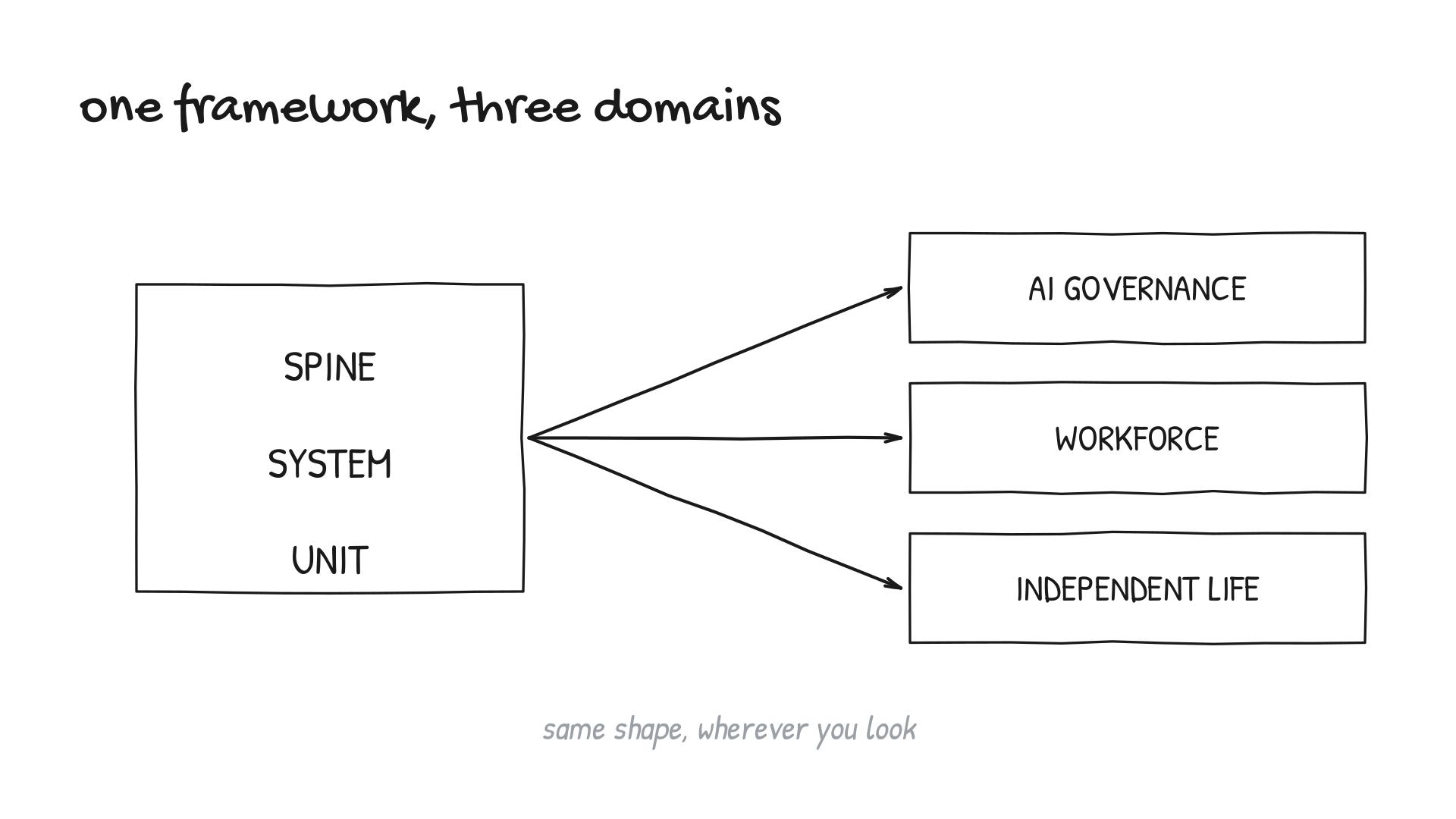
First, the spine, system and unit for AI governance
I have been including in my training a framework for thinking about AI governance - the spine, system and unit.
The spine is the set of core risk management components that does not change regardless of where you are. The world has gone crazy with the number of AI governance frameworks and publications but underneath all of them, there is more in common than different. So I tell people, anchor on one or two frameworks, and extend from there. Rather than endlessly mapping to more and more frameworks.
The system is an interlocking set of risk management controls that starts with answering the question of what risks you have. AI governance and risk management should not be treated as a checklist (especially a generic one that you just purchase from a consultant) but a clear interlocking system, where each part of the system and the controls link and leverage on each other.
The unit is the task. Not the model. Not the use case. Not the problem. The discrete activity where what’s good does not change with the seasons and technology. Focusing on the task allows one to build core capabilities that persist. And not trigger a new round of ‘transformations’ each time a new technology arrives.
Next, the same framework in AI and workforce transformation
I co-authored a paper with the Asia Tech Alliance recently - Making AI Work: A Practical Agenda for APAC Workers and Firms.
The paper argues that adoption is not transformation. And literacy is not fluency. That most organizations are stuck in what the paper calls the Exposed or Frustrated quadrant. Exposed - tools are present but neither the organisation nor the workers know what to do with them. Frustrated - workers have some literacy but the organisation has not changed how work gets done. And that the shift to Transformed requires all three levels working together.
There’s also a spine, system and unit here.
The spine is the foundation that an organisation builds on for every technological wave. Internet, mobile, apps, analytics, AI. And all the many different tools that come with each wave. There is more in common than different between these waves. Without a spine to build off, organisations keep starting over with every new tool and every new technological wave.
The system is the way technology and tools are integrated with the workflows, management practices, and oversight structures that allow worker fluency to translate into real business outcomes. A worker who completes an AI course and returns to an unchanged workflow or an organizational environment that stays in the past will never gain fluency.
And the unit is the task again. Not the job. Not the model. Not too different from the unit for AI governance I described above.
The same framework in independent life
I have been applying the same framework to independent life without naming it until this week.
The spine is not all my domains, one by one. My restlessness has led me to different domains across the years. AI governance, risk management, financial engineering, fundamental PhD research, finance, art and so on. But I have realized that there is more in common than different between these domains. I learnt about models in financial engineering and model risk management. But what I learnt there translated to AI. I learnt about math in finance. But that understanding also translated to using math to generate patterns and art, and think about the intersection of math in art and AI. And there are many more. And I have learnt that while this is a disadvantage as an employee, it’s an advantage as an independent.
The system is how those pieces connect, so I am not starting from zero each time. This is the part I only really began building recently. A talk becomes a post becomes an ebook, the ebook becomes slides, the slides become modules I can reuse. The modules I built this week mean I will not draw a new deck from scratch again for each and every client - I will assemble one from parts I have already tested. A platform holds all of it. The ebooks reach people who were never in the room. The system is what lets the spine work without me being present for every delivery.
The unit is the task. The specific things I am good at and that repeat. Again, not too dissimilar from the above.
The mundane is still boring. But I repeat less of it every month. That is what the spine, the system and the unit are for.
#IndependentLife #AIGovernance #SpineSystemUnit #AIRiskManagement #MakingAIWork #Transitions #Reflections