
Responsible AI. Trustworthy AI. Ethical AI. Safe AI. Beneficial AI. Human-centred AI. Runtime AI. AI firewalls. AI trust layers. AI agent control planes. And many more.
Sometimes, I wonder how many new terms have been invented since AI governance became a thing. After a while, they start to blur and you wonder why we need yet another new term.
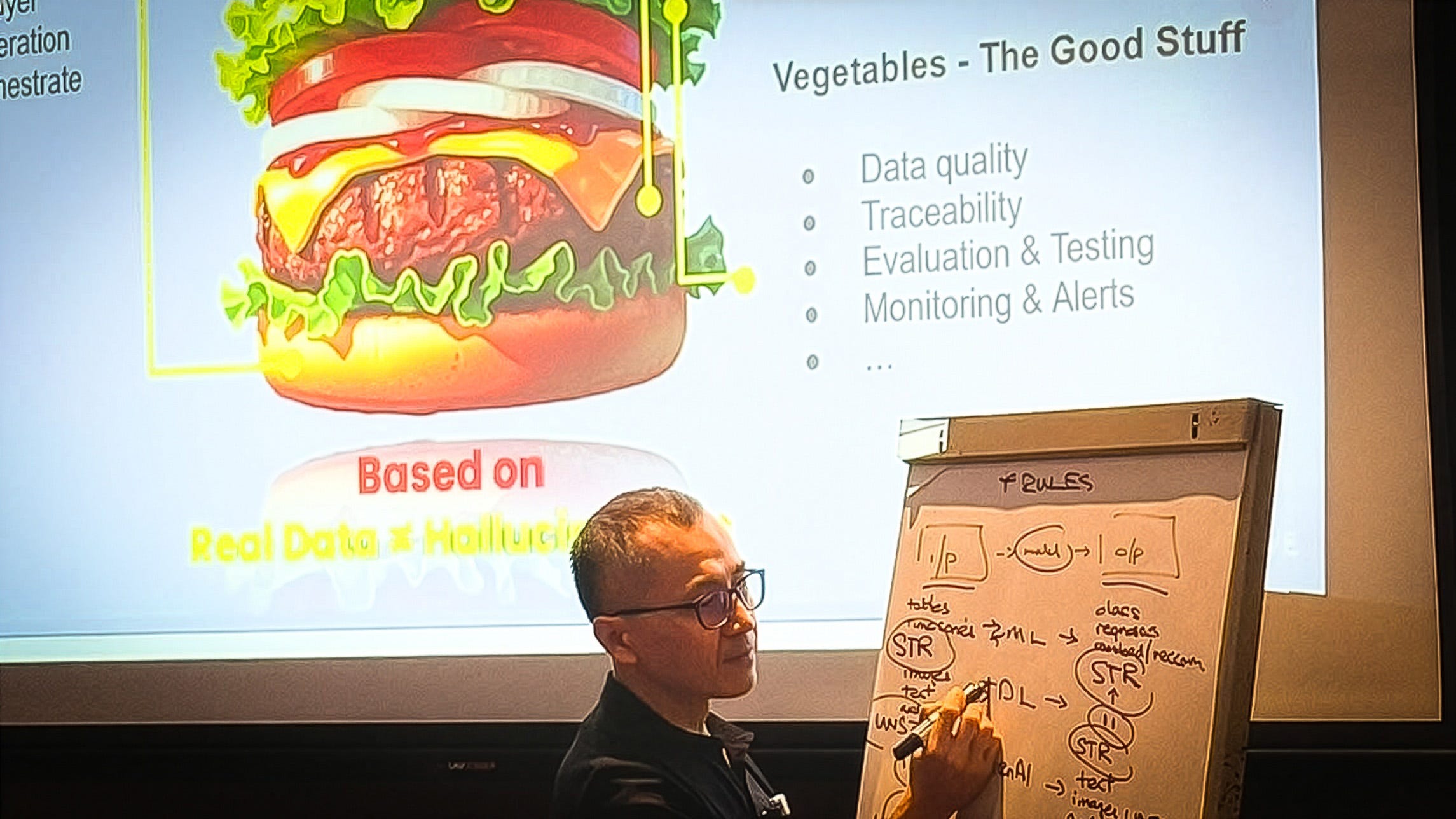
A relatively light week compared to what is coming. Just one panel, and a full day hands-on workshop on AI lifecycle risk management for the Association of Banks in Singapore.
Diving deep into AI lifecycle risk management is not a simple thing. So I spent some time over the week thinking about how to make the topic more accessible. And I realise that part of the issue with the AI field is that we keep using fancy sounding and complex terms to describe fairly simple stuff. And incessantly inventing new ones.
Maybe 4 simple words would do.
The words do not even agree
Ask different people what an AI term means these days, and there’s a high chance you will get different answers. Take guardrails. Is it just the input and output filters? Or all the controls we place around an AI system?
Some treat responsible AI as the umbrella, with ethics, trust, governance and compliance underneath it, and AI assurance below that. Others use trustworthy AI as the catch-all, interchangeably with responsible AI and ethical AI. And each consultant is selling their latest and most complete AI governance control framework under different fancy monikers that suggest they are offering something new.
At some point, you have to wonder how many different ways there are to talk about the same thing.
Does coining a new term mean better AI governance or risk management? Is a more elaborate deck and flowchart a better framework? Will greater complexity lead to better controls? Is that 1000 question control checklist you just bought from a consultant helping or hurting?
At its core, what are we trying to do with AI governance and risk management?
Just 4 words
Maybe we just need to answer one simple question.
Is it good enough?
Not a new framework. Not another acronym. Not some new technospeak.
Four simple words that anyone, even a child, can understand.
You answer them from two perspectives.
Does it perform, and is it safe.
Performance is whether it does the task well enough for what you are using it for. Safety is whether it fails in ways that hurt, and whether you can live with how it fails. And understand that capability and risk are often trade-offs.
Responsible, trustworthy, ethical, explainable, fair, accountable. These all sound nice and warm. But if we cannot even answer whether a system is good enough, then all those words are just virtue signalling.
The workshop
I used this question as the spine of a new workshop series with the Association of Banks in Singapore. This week’s was the first run.
The class starts with a simple question about a bank’s customer support assistant - is it good enough, before we dive deeper into AI lifecycle risk management.
Evaluation first, from the ground up, (again) as a simple question about data and tasks. Then trustworthiness, explainability, fairness, testing and guardrails, across machine learning, deep learning, GenAI and agents.
It is a heavy workshop. Most sections come with live demos on the real open-source tools people use. The learner also builds a chatbot, then a RAG, then an agent with real tools. My learning platform has an app builder, so you can watch the pieces come together without coding, instead of listening to me talk. Then you try to break what you built. Then you secure it. And we end by validating and reviewing all of it. A machine learning model, a GenAI chatbot, a RAG, an agent.
Simple but hard
I know it does not sound easy. And I’m not saying that simple is easy. The question is simple to ask and not always easy to answer.
To say whether a system is good enough, you have to decide what good even means for this use, on this data, for this context. Can you trust what seems good. Can you understand why it is not good. How does testing help us know it is good. How can someone break it. And can you ever stop asking.
Inventing a new term. Reciting a principle is easier. Collating controls in a spreadsheet. Sometimes the thicker the governance deck, the less anyone has asked the one question that counts.
A couple of weeks ago I wrote that I was still looking for the spine of AI risk management. Maybe this is the start.
#AI #AIFluency #AIGovernance #AILiteracy #Reflections #AIRiskManagement
Your two tests, perform and safe, make a vague question answerable, and that is why I like this framing. I would add a third check, whether the failure mode is visible, since a system that fails quietly passes every demo. Singapore's test kit pushes the same idea. https://aideliverybrief.substack.com/p/singapores-new-test-kit-says-a-right