

Don’t force it. Let things flow.
I had scribbled these words on a post-it. I was two months from leaving MAS. I think it was a salve for my anxiety.
For most of the six months since I left, I don’t think I listened to my own note. I forced plenty. Endless coffees, lunches, talks, plans.
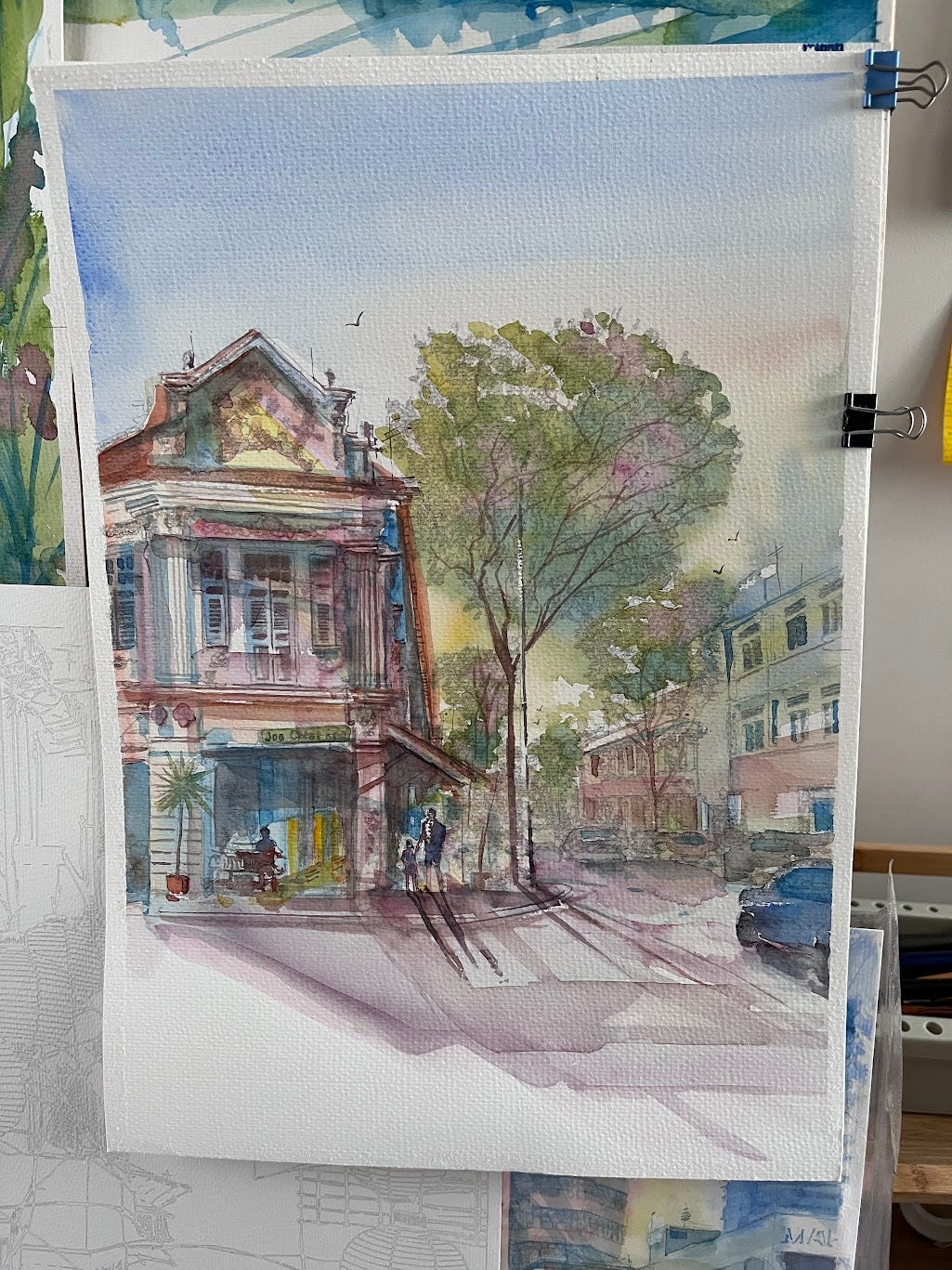
Recently, I’ve started to get back to these six words. And last week, for the first time in more than a year, I managed to dive deep into watercolours again.
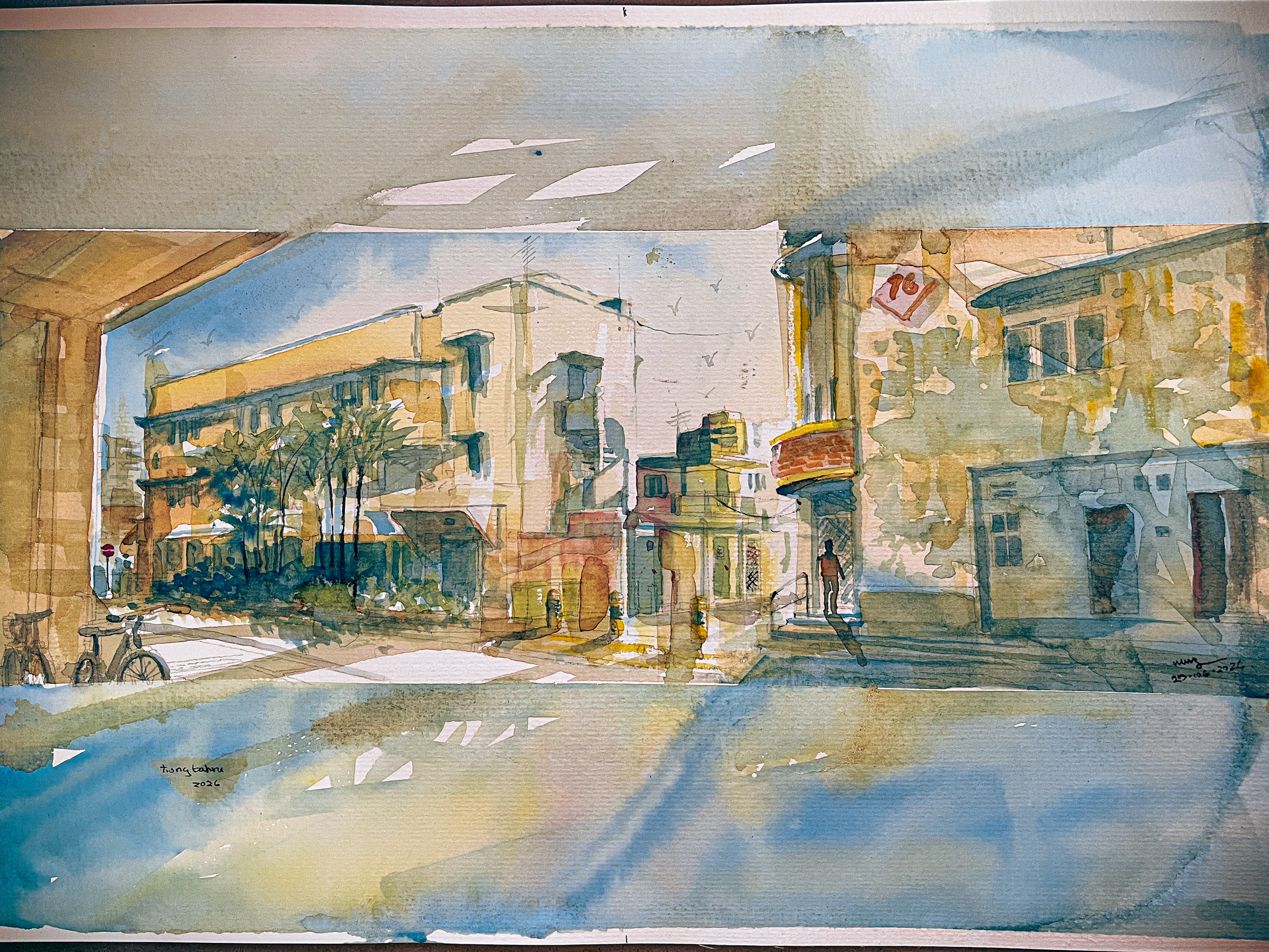
A good friend at work had once remarked that seeing me do art was a good indication of how bored I was at work. I’ve come to the realisation that it’s a bit more than that.
And since this is the six-month mark, it’s a good time for reflections on some personal lessons. And how my view of AI has shifted. Which could perhaps be useful for some others.
My lessons
The first, and the main one. Run experiments and reflect on them.
I left MAS after eighteen years and walked into a void. I did not search for another job before leaving. Even the plan I did write down at the end of 2025 never happened.
In the end, the last 6 months became a series of experiments.
More than two hundred conversations across twenty-five weeks. At least two to three talks or panels every month. Old friends and complete strangers. CROs and PhD students. An anthropologist studying money, and a CEO I mistook for a fellow trainer. Collaborations across the world.
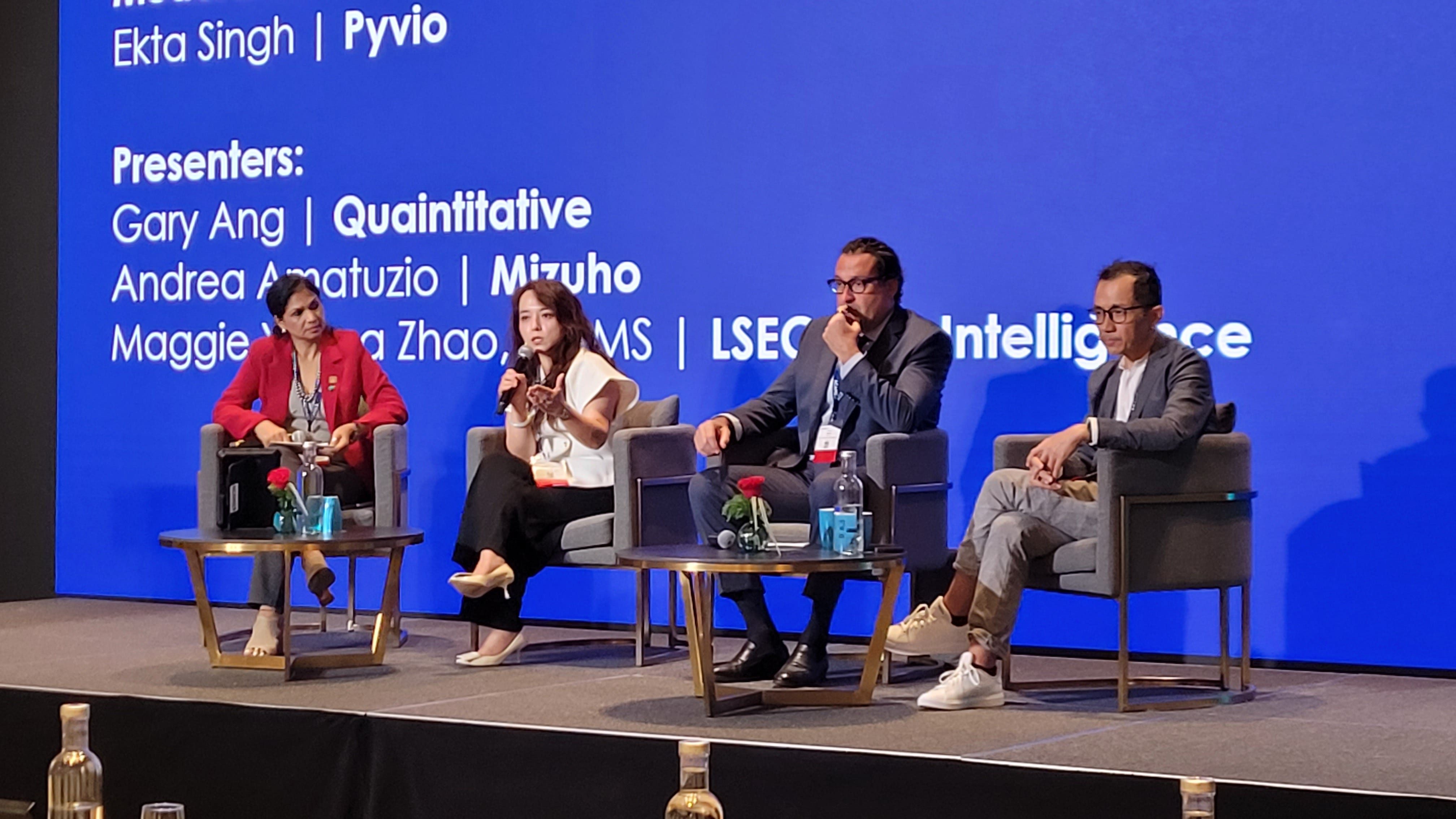
Every week I reflected on what I learned from these conversations. Some of it was connected to AI. Some of it was just about life. People ask how I find the connections between these conversations. I read The Book of Ichigo Ichie recently. It says “notice coincidences” as one of the ten rules of ichigo ichie. I guess this is what it means.
In the age of AI, I think this is how learning looks like.
Two, the filter beats the plan.
My original plan was 80% wrong. My filter - interesting work, people I like, freedom, the work done properly - was almost always right. A plan imposes a conclusion and makes you bend everything to fit it. Even if it feels wrong. A filter just tells you what to walk away from.
Build a filter early, even before you can fully articulate it.
Between a plan and a filter, I’ll take the filter every time. They’ll help you avoid some early missteps.
Three. You have to actually cross.
Not observe. Cross. Watching other worlds from a safe distance is not enough. The value is in gate-crashing them, awkwardly if one must. The insurance world, where I mistook a CEO for a fellow trainer. Legal AI. Digital assets. An MBA classroom on the other side of the world. US AI governance. African bank and insurance boards. Healthcare workers learning deep learning. Wealth managers and family offices. A central-banking podcast. And many more.
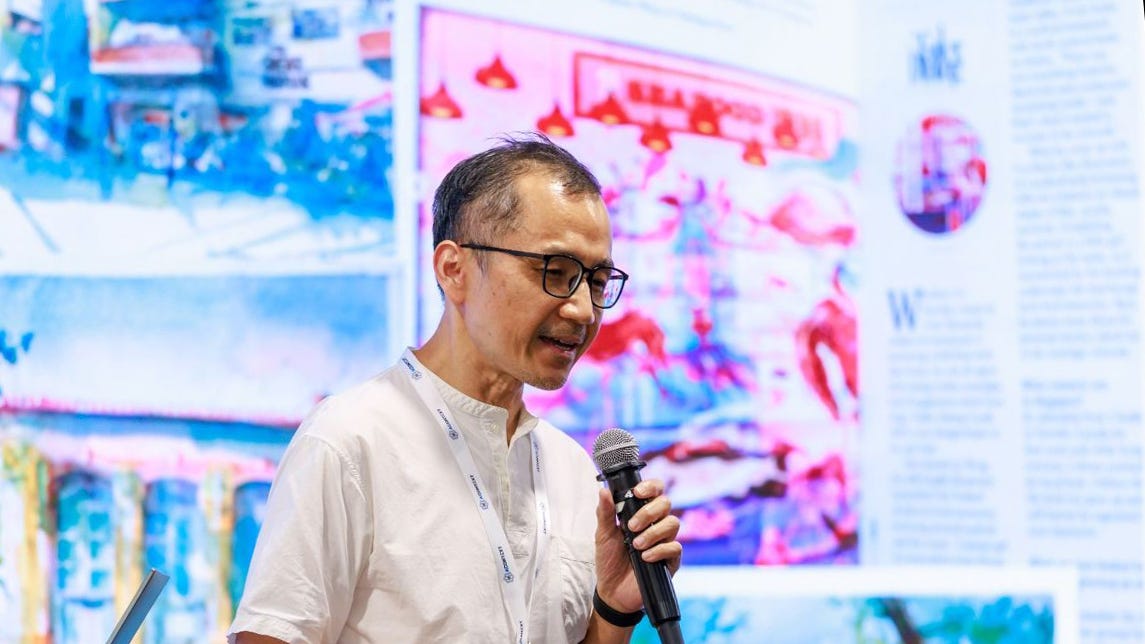
I am an introvert who loses energy when I meet too many people. A side-effect of these crossings - I’m feeling at ease now in crowds. A simple rule is all it takes. If I feel like chatting with someone, I do it. If not, I walk away.
Four. Flow is just gradient descent.
Misses are information. The proposals that die, the rooms that don’t want your lines, the conversations that trail off - they feel like failures, but they point you in a better direction.
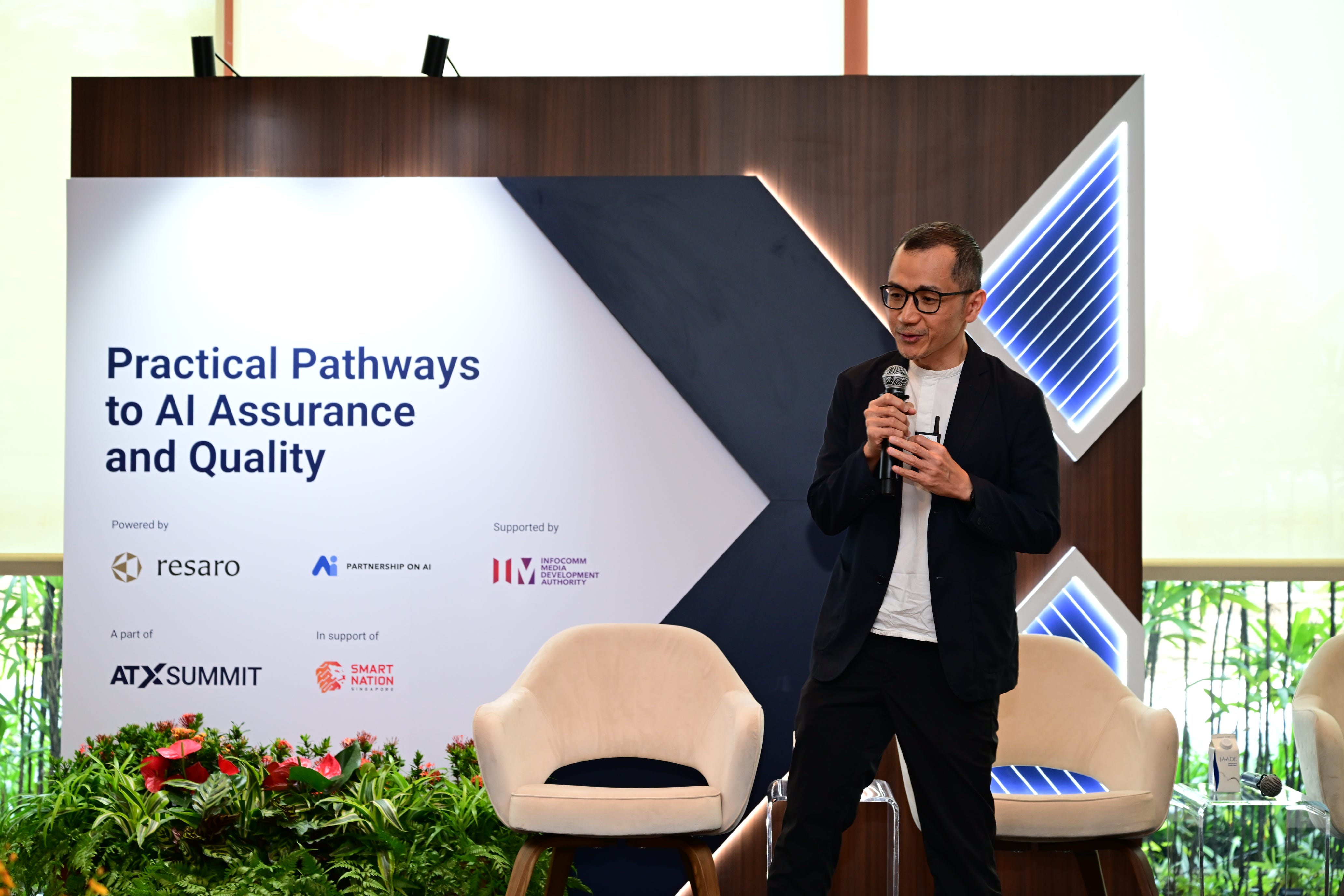
In gradient descent a wrong step isn’t failure; it’s the signal that tells you the slope, and which way to step next. You cannot know which direction is right without the wrong ones. Expect a lot of them early, and don’t mistake them for verdicts.
Five. Guard the freedom you left for.
If one leaves for some kind of freedom, protect it like the scarce thing it is.
That means cleaner no’s - to the gig that pays but owns your calendar, to the room that drains you, to the prestige that quietly puts you back in a box.
It means letting no single party own you, and having no single point of failure. And it means keeping at least one thing in your life that owes nothing to the work.
If the freedom is the whole point, don’t trade it back the first time saying no feels awkward.
How my view of AI shifted
I started by seeing the unevenness.
AI was in every single conversation, but understanding was an uneven valley - someone shipping AI products daily, someone else whose work was untouched, same city, same week. I stopped seeing one AI race and started seeing dozens, on different tracks, most runners unable to see each other.
Awareness had stopped being the solution and become the problem, setting expectations nobody could square with reality.
While some folks were going from prompt and context engineering to harness and loop engineering, more sane folks were wondering how an LLM that made a silly hallucination one in 20 times could be trusted to perform an action that mattered.
The boring fundamentals matter more than the hype.
When sixteen agents built a working C compiler, what made it work wasn’t the frontier. It was the boring list - tests, documentation, monitoring - the same list from the risk guidelines I wrote.
Real understanding compounds and builds a flywheel. Prompt engineering resets with every model update. AI courses that just teach one to prompt and pray are not building AI literacy but just scams in disguise.
The scaffolding is important but thinning.
The same week a few of us published a paper extending model risk discipline into the agentic world, SR 11-7 - the standard I’d been referring to for more than a decade - was quietly retired.
The real rules seem to be thinning out just as the systems get more complex. We have plenty of publications on responsible AI. But tell me, how many bite and are effective?
So I guess we just have to fall back on first principles, not frameworks. And I learned to distrust fluent reasoning, in models and in myself.
Coherence is not correctness.
And I ended more sceptical than I began.
Not of the technology - of the expectations around it. I think they are overblown. Whether AI becomes as common as electricity or quietly stalls, an identity built entirely on it is fragile either way. That is what sent me back to water and paper.
What I do now
The shape that emerged is not the one I planned.
Training for a few associations and institutes. A few adjunct roles. Some writing gigs. A startup I’m building with a collaborator. A few advisory gigs on the horizon.
No single party owns me. No exclusivity. If one fails, no big deal. I can still survive.
Before I start any gigs these days, I know to zoom in on the non-solicitation, non-competes, indemnity and intellectual property clauses. These are the ones that can matter more than the money.
I’ve stopped saying yes quickly. The no’s have gotten cleaner. I show up to speak when I have something to say, and otherwise I’d rather listen.
And I’ve started hedging the one risk I couldn’t diversify away. Everything I do sits in the same asset class - AI. So the uncorrelated asset is the art. By hand. Slow. On paper. No prompt. No FOMO. Just observation and whatever is left of Singapore before it disappears.
It may not take off. The world of art is brutal. But it’s irreducibly human.
Gradient descent has one catch. You follow the slope down, you correct, you flow, and you arrive somewhere that looks exactly right. But it might only be a local minimum. A valley within a valley. A few more steps might have taken you somewhere better, and you’d never know.
So I won’t pretend six months converged on an answer. It’s just a start.
The twenty-four weeks
Every Monday for six months, I tied that week to an AI concept. I stopped numbering them around week twenty - but here they are, in order. Start anywhere.
(Each links to the original LinkedIn post.)
Week 1 · 12 Jan 2026 — Valleys, Shifting Sands & Pillars in AI
AI everywhere, understanding nowhere near even. The uneven landscape.
Week 2 · 19 Jan 2026 — The Darn Messy Middle of AI
When awareness stops being the solution and becomes the problem.
Week 3 · 26 Jan 2026 — Phase Shifts in AI and Life
Not pivots. Changes of state. Why I’m optimistic about AI.
Week 4 · 2 Feb 2026 — Resonance - AI at Work and in the Classroom
Becoming a LinkedIn Top Voice the same week I rediscovered my voice.
Week 5 · 9 Feb 2026 — The Flywheel
Sixteen agents, one C compiler, and the boring fundamentals that made it work.
Week 6 · 16 Feb 2026 — Many Different Worlds
There isn’t one AI race. There are dozens, and most runners can’t see each other.
Week 7 · 23 Feb 2026 — The Outsider
Transfer learning, and why nothing we learn is wasted.
Week 8 · 2 Mar 2026 — Alignment
The boat-race agent that spun in circles, and freedom as non-negotiable.
Week 9 · 9 Mar 2026 — Context
The context window, finite attention, and learning to filter.
Week 10 · 16 Mar 2026 — The Edge of Action
Three gaps, ten weeks of evidence, and what I finally decided to build.
Week 11 · 23 Mar 2026 — Grounding
The symbol grounding problem, and meeting rooms where they actually are.
Week 12 · 30 Mar 2026 — Diffusion
Graph diffusion, signal versus noise, and the cost of saying yes too much.
Week 13 · 6 Apr 2026 — Gradient Descent
Why the misses weren’t failures. They were the gradient.
Week 14 · 13 Apr 2026 — Unfinished
No prepared deck survived the room. And fallow isn’t drought.
Week 15 · 20 Apr 2026 — Irony
SR 11-7 retired the same week we argued for more discipline, not less.
Week 16 · 27 Apr 2026 — Thinking Out Loud
Chain-of-thought can be confident, fluent bullshit. So can I.
Week 17 · 4 May 2026 — Serendipity and Emergence
Rojak, introversion, and building the conditions for emergence.
Week 18 · 11 May 2026 — Strange Attractors Again
Chaos isn’t random. It’s shaped by topology.
Week 19 · 18 May 2026 — Impermanence and Drift
Concept drift, disappearing spaces, and a plan turned unrecognisable.
Week 20 · 25 May 2026 — The Crossings
The value isn’t in observing the worlds. It’s in actually crossing.
Week 21 · 1 Jun 2026 — Sum of the Parts
Skill-stacking, freedom of choice, and a hard question about privilege.
Week 22 · 8 Jun 2026 — The Dream and the Plan
Breaking from the Plan is the beginning, not the answer.
Week 23 · 15 Jun 2026 — 5 Useless Things
Useless to box, to force, to perform, to accommodate, to follow convention.
Week 24 · 22 Jun 2026 — The Riskiest Play
Concentration risk, an uncorrelated asset, and picking up the brush again.
I write a lot on both LinkedIn at https://www.linkedin.com/in/garyang/ and also Simply Boring AI, my Substack at simplyboring.ai. Sometimes I cross post. Sometimes only on one. I’m still figuring out works best. So follow me on both.
And if you’d like to work together - workshops, teaching, advisory - I’m at quaintitative.com.
#IndependentLife #AIRiskManagement #Transitions #Reflections #GradientDescent